Last updated November 17, 2026







Free written scope consultation - allowances, timeline, and change-order rules on paper before a single trade is scheduled
Construction Warning Signs: A McKinney Homeowner’s Reference Guide
Most warning sign guides describe what failure looks like after it’s well underway. The crack is an inch wide, the roof is leaking, the fence is leaning into the neighbor’s yard. By then you’re paying to fix damage, not to catch a problem. In McKinney, the useful signals show up much earlier, and they show up in patterns that national inspection checklists don’t describe. The clay soil under a lot of Collin County moves more than most homeowners realize, and the way that movement telegraphs itself through brick, drywall, doors, and flatwork is its own language. This guide teaches you to read it: what each crack pattern, gap, and change in your home actually means, which signals are cosmetic, and when it’s time to call someone.
Quick Answer
Construction warning signs in McKinney fall into three groups you should watch: cracks and gaps that track with soil movement (stair-step brick cracks, door binding, drywall nail pops), roof deterioration patterns you can read from the ground (granule loss, lifted shingles, flashing rust), and flatwork failures that signal a subbase problem rather than surface wear. Cosmetic signals can wait for a scheduled assessment. Structural patterns – widening stair-step cracks, doors that stick in one season and not another and get worse each year, or new gaps between a wall and floor – warrant a professional look before you spend money on the wrong repair.
Styles & brands we work with
- Kitchen remodeling
- Bathroom remodeling
- Home additions & ADU
- Roofing
- Windows & doors
- Driveway & pavers
- Fence
Table of Contents
- How to Tell Settling Cracks from Structural Cracks in McKinney’s Clay Soil
- Reading Brick Crack Patterns on Your Exterior
- Roof Warning Signs You Can See From the Ground
- Driveway and Flatwork: Subbase Failure vs. Surface Wear
- What Interior Signs Tell You About Exterior Problems
- Fence Warning Signs Worth Taking Seriously
- What to Photograph and How to Document It for Insurance
- The Right Order to Fix Things
How to Tell Settling Cracks from Structural Cracks in McKinney’s Clay Soil
A stair-step crack in a McKinney brick exterior isn’t cosmetic. It’s the specific signature of differential foundation movement, where the clay under one side of the footing has dried and shrunk more than the clay on the other side. Every home settles a little. The question is whether the movement is seasonal and stable, or active and progressing. Those are different problems with different price tags, and the way you tell them apart is by measurement and pattern, not by feel.
Get a base measurement and write it down. Buy a cheap crack gauge or simply mark the ends of a crack with pencil and note the width on a calendar date. Then measure again in 60 to 90 days. A crack that holds steady through a wet spring and a dry August is probably tied off. A crack that gains a sixteenth of an inch over a dry spell and doesn’t close back up is telling you something.
Signals that point to normal settlement
- Hairline cracks in mortar joint corners that appear and stay under a quarter inch
- Diagonal cracks at window or door corners that don’t extend past the brick field
- A gap between a wood fence and a brick wall that opens slightly in summer and closes in wetter months
- Interior cracks that follow drywall seams or tape joints rather than cutting across wall panels
Signals that point to structural movement
- Stair-step cracks through mortar joints that widen toward one end
- Cracks wider than an eighth inch that continue growing on repeat measurement
- Vertical cracks through individual bricks, not just the mortar between them
- Cracks that mirror each other on opposite sides of a wall or opposite ends of the house
- Doors and windows that bind progressively worse each season
If you’re seeing the second group, have it evaluated before you touch cosmetics. Repointing brick over an active crack just hides the evidence. On a broader renovation, this is the kind of sequencing judgment we bring to a project, and it’s why a project like a home addition & ADU starts with an honest look at the existing structure before any new footprint is drawn.
Reading Brick Crack Patterns on Your Exterior
The direction of a crack tells you where the movement is coming from. In our experience across McKinney’s subdivisions, certain patterns come up again and again, and each one points to a different part of the problem.
Stair-step cracks
These follow the mortar joints diagonally across the brick. They usually indicate that one corner or side of the foundation has moved downward relative to the rest. To the untrained eye they look minor because the brick itself stays intact. To anyone reading the pattern, they’re the loudest signal on the wall.
Vertical cracks through brick
A crack that slices straight through a brick instead of stepping around it is under tension. On new construction, this can show up at interior corners as the structure works through its first few seasons. On an older wall, it’s worth more scrutiny, especially if the crack widens toward the bottom.
Cracks that follow the roofline or horizontal joints
Horizontal cracks between courses, especially near the top of a wall, can point to a load issue above or a lintel problem. This is where a roofing observation and a structural observation overlap, and it’s one reason we like a single contractor to see the roofline and the wall together rather than two specialty trades who never talk.
On any exterior inspection, use a pair of binoculars and photograph everything from multiple angles, including scale references like a coin or tape measure in frame. What looks like cosmetic mortar wear from the ground can look very different once you zoom in.
Roof Warning Signs You Can See From the Ground
You don’t have to climb onto a North Texas roof to know something’s wrong. The pattern of granule loss and the location of lifted or creased shingles tell you a lot, and they help you tell hail damage apart from ordinary sun and heat degradation. That distinction matters because one is often a possible insurance conversation and the other is just maintenance.
Granule loss patterns
Granules are the sand-like coating on asphalt shingles, and losing them is how shingles age. But the pattern tells a story. Random, scattered granule loss spread evenly across the roof, especially on sun-facing south and west slopes, is what heat and UV degradation look like. Localized granule loss in a concentrated patch, especially with dents or bruises in the surrounding soft metal, is what hail impact looks like. That’s the pattern that supports a claim.
What to look for with binoculars from the driveway
- Scan the south and west slopes first. Those get the most sun in McKinney and show aging earliest.
- Look for shingles that are lifted, creased, or tabbing, where the tab is no longer flat.
- Check the soft metal: vents, gutter aprons, and the flashing around a chimney. Dents there suggest impact.
- Watch for dark streaks. Those can be algae, which is cosmetic, or exposed asphalt where granules are gone, which is not.
- Look at the valleys and the base of the chimney for rust lines or staining on the flashing.
- Note any section where the roofline looks wavy or sagging. That’s a deck or structural signal, not a shingle problem.
If you’re already planning a roof replacement, the material choice matters as much as the brand. Working with a broad material line, from GAF to certainteed, lets you compare warranties and match the shingle to the climate, budget, and expected life of the roof rather than taking whatever a single-vendor contractor pushes.
Driveway and Flatwork: Subbase Failure vs. Surface Wear
Concrete flatwork in North Texas fails in two distinct ways, and confusing them wastes money. Surface wear is cosmetic. Subbase failure is structural. If you see a problem and patch the surface first, the fix doesn’t hold, because the movement that caused it is underneath.
The quick test: look at the type and location of the damage. Surface wear means cracks from ordinary traffic load, spalling at the edges, and staining. Subbase failure shows up as settled slabs that create trip hazards, cracks that widen along a control joint, or a driveway with visible highs and lows. That visible undulation is the important one. It usually means the compacted base underneath the slab was not right, or the soil it sits on has moved after the slab was poured.
A short checklist for flatwork signals
- Cracks running along a control joint that have opened wider than a quarter inch
- Slabs that have settled and create a lip of more than an inch at a joint
- Standing water in the same low spot after every rain, months after the pour
- An isolated crack radiating from a corner into the middle of the slab
- Spalling, flaking, or scaling of the top surface, which is surface wear and can be resurfaced
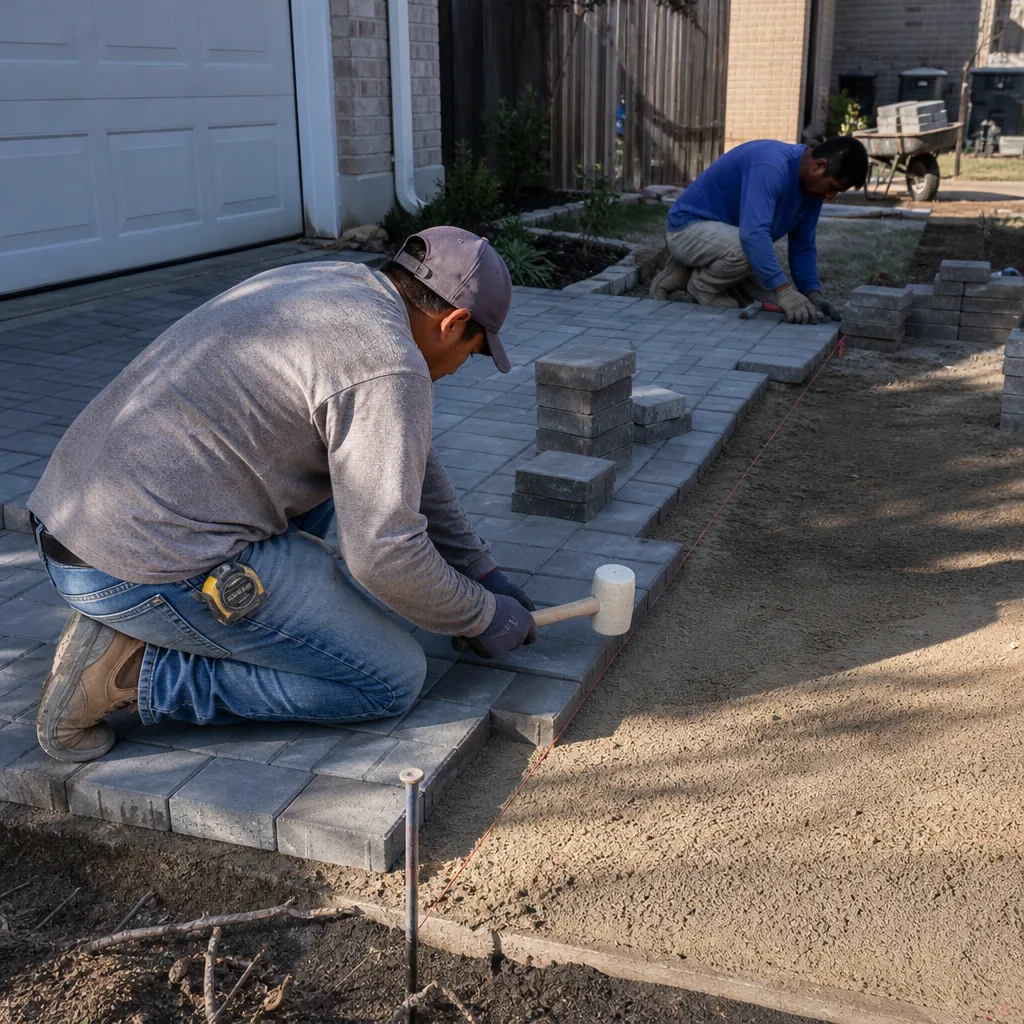
If you need to replace rather than patch, the honest path is to look at the whole approach: removal, base correction, and proper drainage. That’s a scope we handle on the driveway & pavers side, working with premium hardscape systems from Belgard, Unilock, Techo-Bloc, Cambridge Pavers, and Tremron so that the fix addresses what’s underneath rather than only what you see from the street.
What Interior Signs Tell You About Exterior Problems
Interior symptoms are often the earliest warning of an exterior issue. The wall of your McKinney home does more than enclose the room; it transmits motion from the foundation through the framing, and when that motion is active, the inside of the house reports it first.
Door and window binding
If a door that used to close cleanly now sticks, and the problem grows worse over months, that’s a racking signal. The frame has shifted enough to change the opening. The one-season occurrence, like a door that sticks in August and frees up in January, points to seasonal clay movement. The one that gets progressively harder to close every year points to active movement, and the sooner it’s looked at the better.
Drywall nail pops and cracks
Nail pops appear when drywall moves slightly against the studs. A handful of pops near seams, especially in a new-to-you home’s first year, can be normal. Pops that appear and then re-appear in the same place after being repaired are a good sign the wall is still moving. The location is important: pops and cracks that cluster near the corners of an exterior wall point back to what’s happening outside.
Floor gaps and separations
A gap between a baseboard and the floor, or between floor planks, that wasn’t there before is an important tell. It can mean the floor system is deflecting or that the slab has dropped slightly beneath a finish. Either way, it’s a structural signal, not a finish problem.
Windows that fog or show condensation
A failed window seal shows up as fogging or condensation between the panes. It’s a different problem from a structural one, but on a broader exterior project it’s worth addressing since you’re already there. When that happens, working with brand lines such as PGT, CGI, and ECO Window Systems gives you options across performance and budget rather than a single forced choice.
Our technicians have up to 10 years of experience reading these interior signals and tracing them back to their source.
Fence Warning Signs Worth Taking Seriously
Fences fail the same way houses do in North Texas, from the bottom up, driven by soil movement and moisture. The fasteners rarely fail first. The posts do.
- Leaning posts. A post that leans at all is losing grip on the soil. A post that leans and doesn’t return after wet weather is failing.
- Rot at the base. Wood posts set in clay hold moisture at the ground line. Soft wood an inch above grade is the early sign.
- Sagging gates. A gate that drags because it has separated from the frame is a sign the posts have moved, not the hinge.
- Fastener pull-out. Nails backing out along a rail mean the boards are moving relative to the frame.
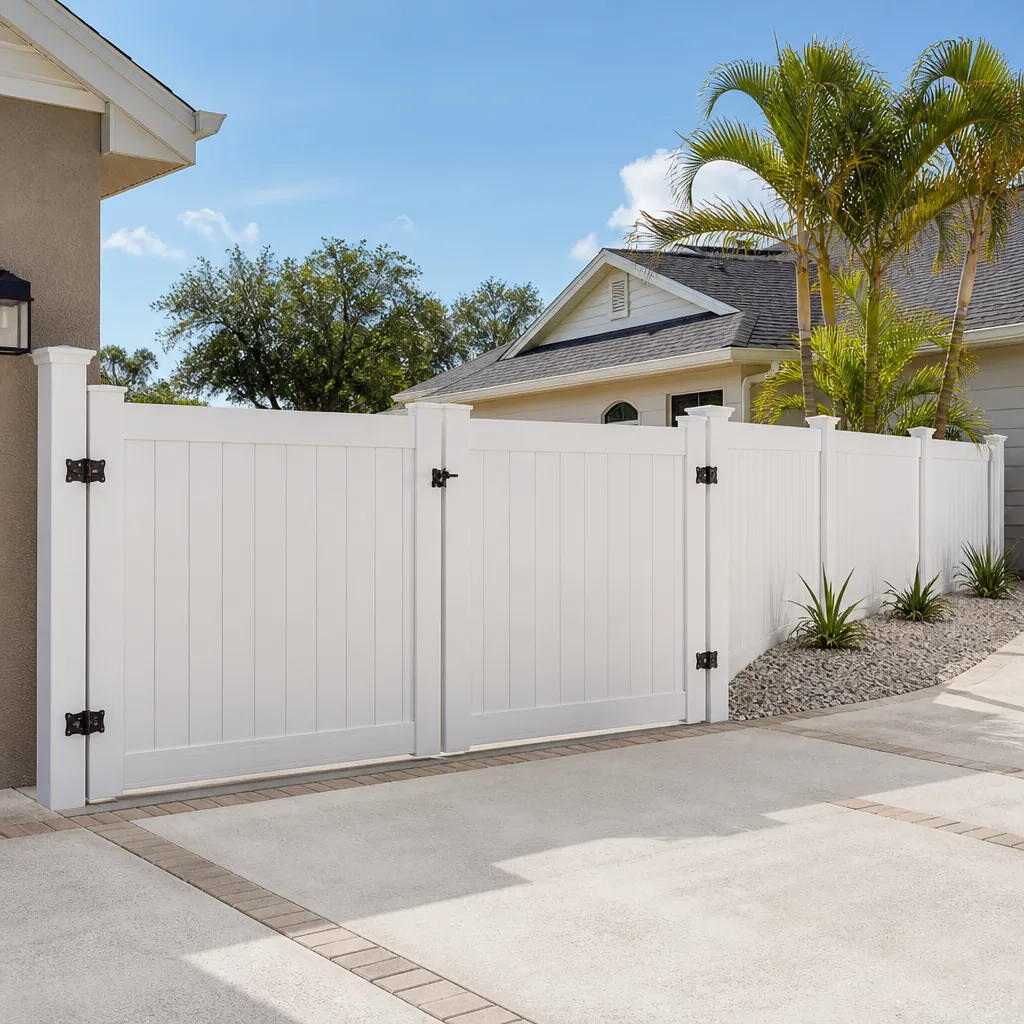
If the fence is at the end of its life, it’s worth walking the line and asking what the next material should be rather than what the exact same material was. A fence installation handled with proper post depth and drainage outlasts a repair almost every time.
What to Photograph and How to Document It for Insurance
Insurance documentation is not about whether you plan to file a claim. It’s about whether you can file one later if it becomes necessary. Photograph early, record measurements, and keep a written log. Most insurers, whether a standard Texas homeowners’ policy or a specific wind and hail policy, want a documented time sequence and clear images showing the damage in context.
What to photograph immediately
- Every crack, from a wide angle and then close up, with a scale reference in frame (a coin, a tape measure, a ruler)
- The intersection of wall and roofline, and the corners of the building at ground level
- Patches of concentrated granule loss on the roof, and the metal vents and flashing near them
- Any water intrusion on the inside, before you clean up or patch it, with a date-stamped photo
- Gutters, downspouts, and the base of the chimney, all the points where water concentrates
What to record in writing
- The date you first noticed the problem
- The measurement and the date of each follow-up measurement, so you can tell an adjuster which crack widened and by how much
- Any prior repair in the same location, with the date and what was done
- Weather events that correlate with the timing, especially any hail over the roof
This log is what turns a vague “it started getting worse” into a documented timeline. When an insurer is deciding whether a crack is covered, a written timeline is often the difference between approval and a fight.
The Right Order to Fix Things
Warning signs arrive together. When you see a cracking wall, a sagging roofline, and a settled driveway on the same afternoon, the instinct is to fix the visible damage. The better approach is to feed the diagnosis into the order of work. Ground movement first, water path second, structure third, and cosmetics last. If you repaint a rising wall crack before the wall stops moving, you’ll be repainting next season.
This is one place where a single contractor across phases helps. If the roof flashing is leaking into the interior, that has to be fixed before the interior drywall is repaired. If the driveway is failing from a subbase issue, that has to be handled before the finish pavers go back in. A single scope with a single phased plan means the trades aren’t quietly undoing each other’s work. From the driveway to the roofline, when the plan is one plan, the diagnosis holds together. Ask us how that sequencing applies to your specific home and what should be addressed first.
Common Mistakes to Avoid
- Repointing brick over an active crack. New mortar hides the evidence but doesn’t stop the movement underneath. You’ll get the crack back in a season or two.
- Assuming a cosmetic crack is structural, or vice versa. Measuring is the answer. The crack gauge and a calendar beat a gut feeling every time.
- Treating a roof granule loss as proof-positive of hail damage. Loss in a uniform pattern usually means UV aging. Concentrated loss in one area, paired with dents in the soft metal, is the pattern to document for an insurer.
- Patching the surface of a settled driveway. If the base is wrong, the patch will fail. The subbase is the whole point.
- Fixing interior drywall before the exterior source is repaired. You can’t win a race between a roofline leak and a fresh coat of paint. Fix the source first, then the interior.
- Photographing cracks without a scale. A photo with no ruler or coin in frame tells an adjuster almost nothing. Always include a reference and a measurement in the same shot.
- Waiting for a symptom to become a failure before calling anyone. A measured, growing crack is the cheapest time to make a plan. The same crack after a structural shift isn’t.
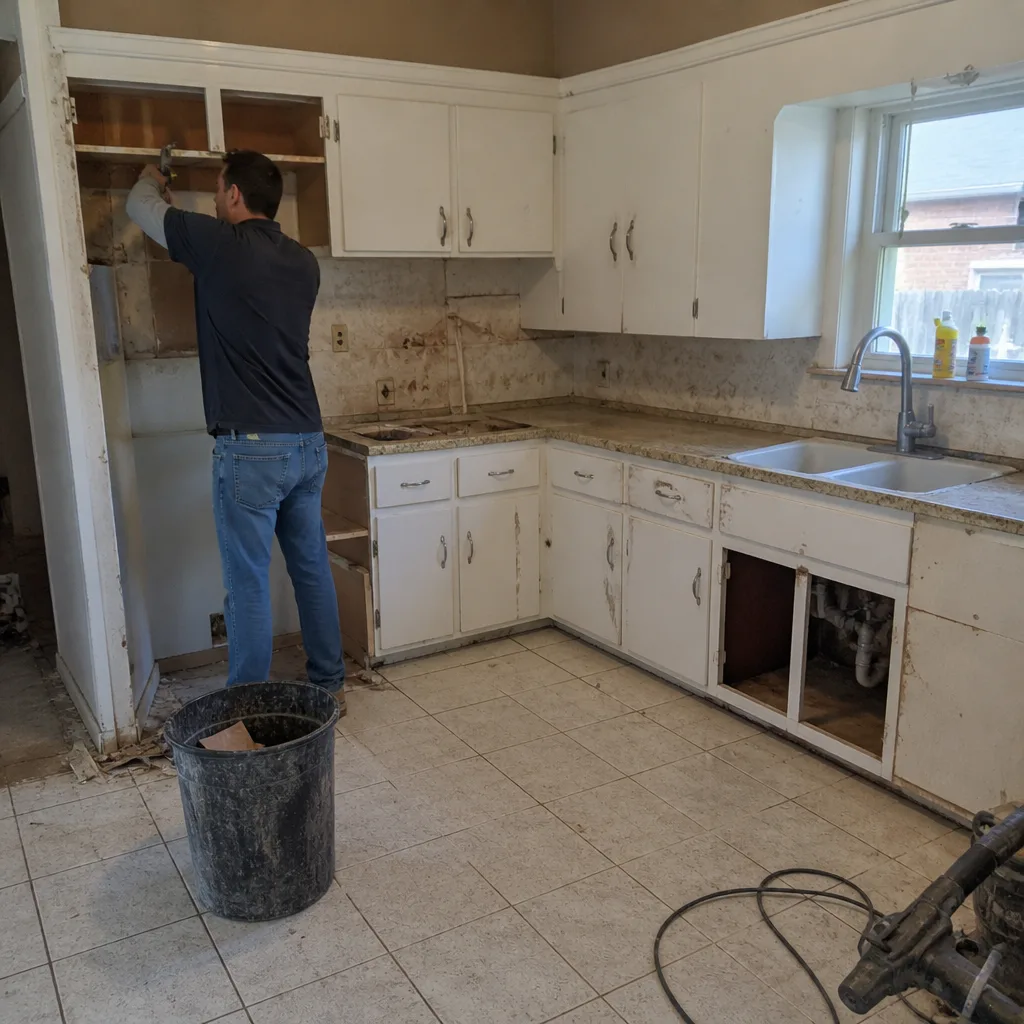
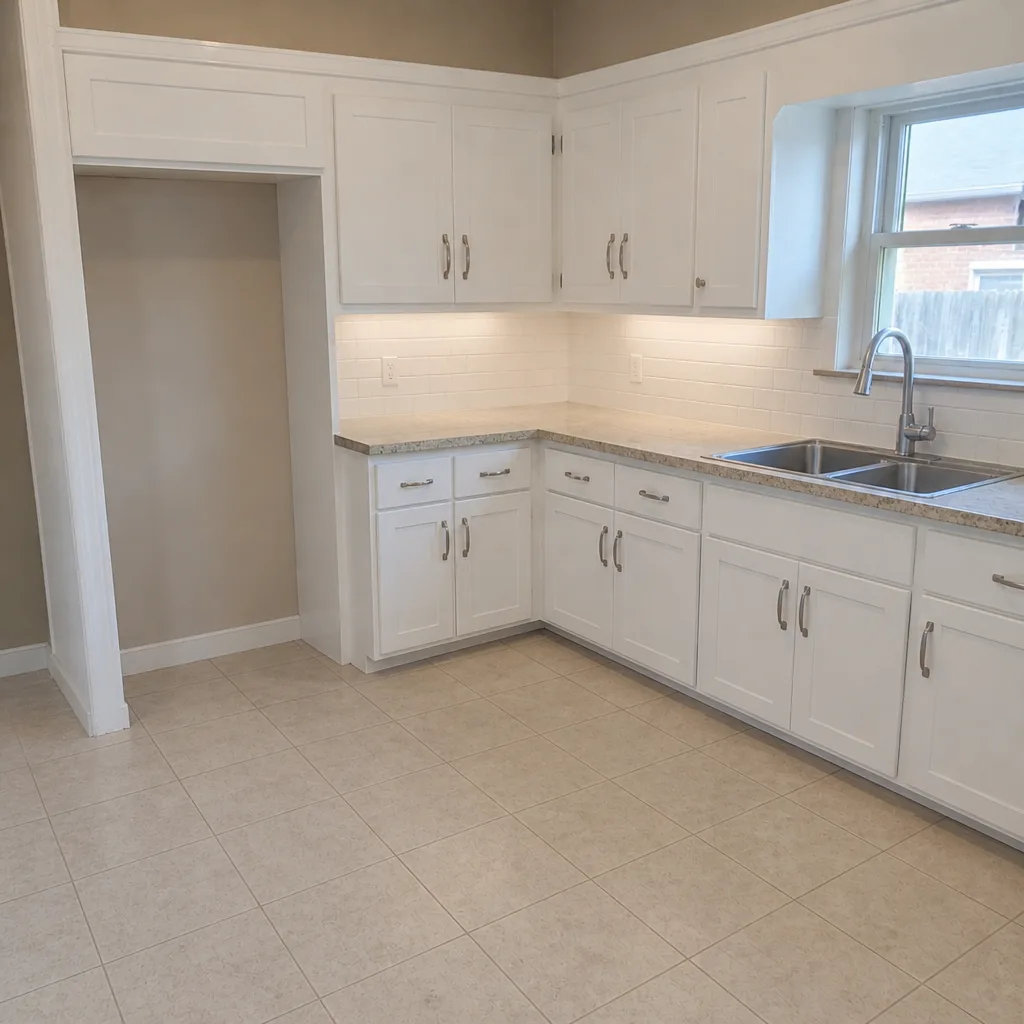
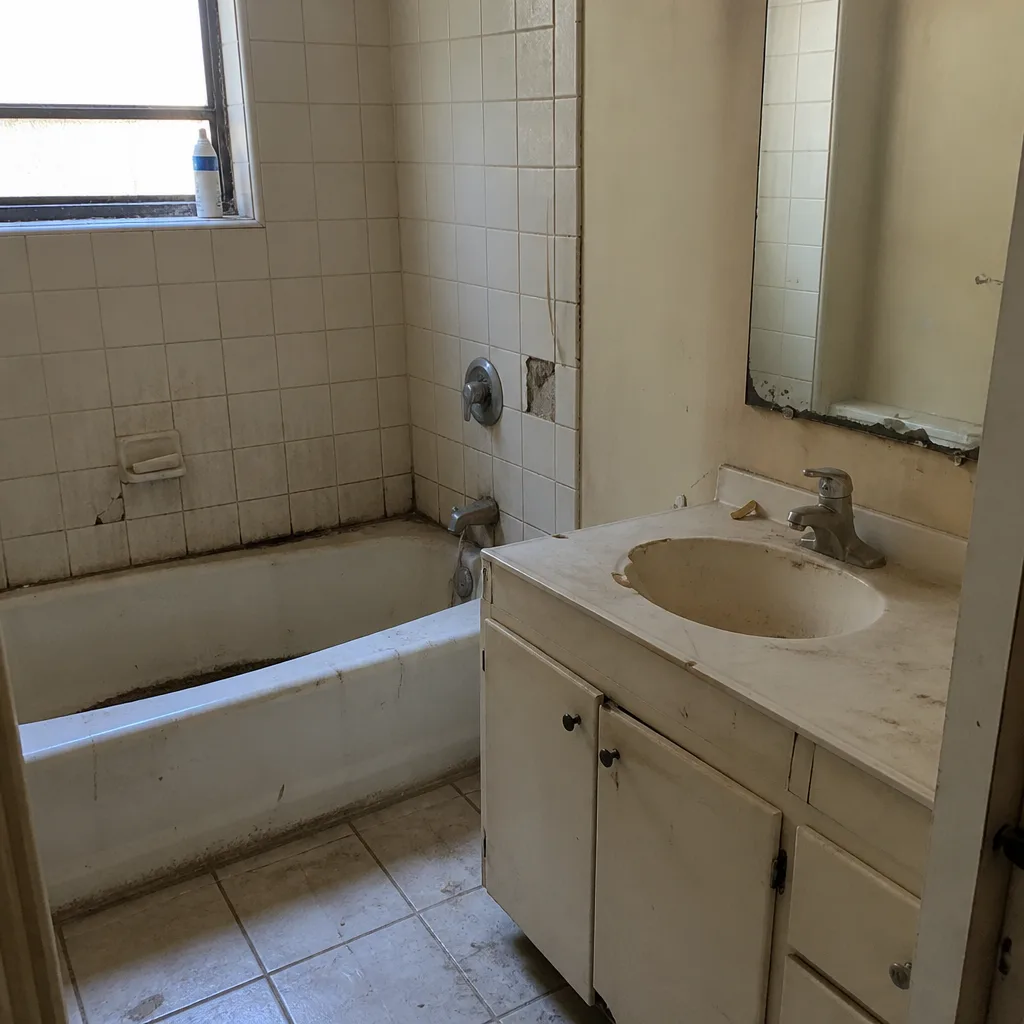
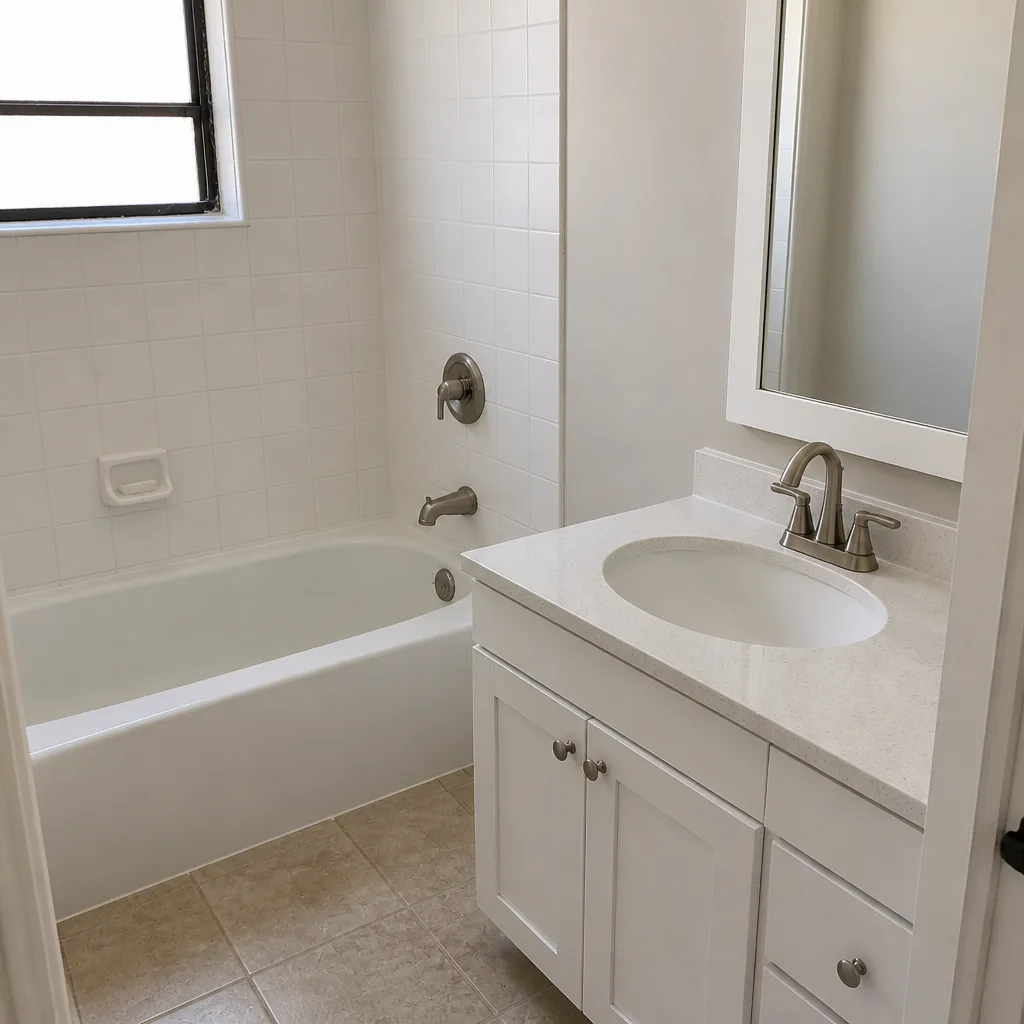
See the difference
 Before
 After
 Before
 After
 Before
 After
When to Call a Professional
Call when a crack or gap is growing on repeat measurement, when a door or window binds progressively season after season, when you see stair-step cracks wider than an eighth inch, when a roof shows concentrated granule loss with dents in the soft metal, when a driveway has settled into true highs and lows, or when a fence post has leaned and stayed leaning after wet weather. Don’t call for a single hairline seam crack with no movement. Do call for anything that’s active, widening, or clustering in one place.
If you’re not sure which category you’re in, a measured walkthrough settles it. Construction McKinney offers free estimates across McKinney. Call (844) 761-9152. We answer 24/7. Fast dispatch from 7am to 7pm, Sunday through Friday.
Frequently Asked Questions

The main difference is movement over time, not the direction of the crack. A settling crack holds its width through wet and dry seasons. A structural crack widens on repeat measurement and keeps widening. Measure both ends of the crack, note the width and the date, and check again in 60 to 90 days. If it’s growing, treat it as structural until a professional says otherwise. Call (844) 761-9152 for a free estimate if you want that check done properly.
Yes, by the pattern of granule loss. Uniform loss spread across the sun-facing slopes points to UV aging. Concentrated patches of loss, especially near dents or bruises in the soft metal vents and gutter aprons, point to hail impact. Binoculars and a few photos from multiple angles give you enough to know whether it’s worth an insurance conversation or just a planned roof replacement. For a material comparison while you’re at it, call (844) 761-9152 for a free estimate.
Progressive binding is almost always a frame movement signal, not a hardware problem. A door that sticks a little more every year is telling you the wall opening has shifted. A door that sticks only in the dry season and frees up after rain is showing seasonal clay movement, which is common in McKinney and much less urgent. If it’s getting worse year on year, get it looked at before it becomes expensive. Call (844) 761-9152 for a free estimate.
Start with the wide shot, then the close-up with a scale reference in the same frame, and record the date and measurement in writing. Then repeat the same shots at the same angles every time you measure. Insurers need the sequence, not just a single photo, so keep the same camera angles and note the date on every shot. If you’d rather have a contractor document it, call (844) 761-9152 for a free estimate.
It depends on the scope. Cosmetic repointing usually doesn’t, but structural repair or foundation work typically does. Most Texas cities require a permit for structural repair, so check with McKinney’s building department on your specific project before any work starts. A reputable contractor pulls the permits on their scope and includes them in the written estimate. Call (844) 761-9152 for a free estimate and we’ll tell you which permits your project needs.
For a one-to-two-story home, a walkthrough of the roof, walls, driveway, and fence usually takes most of a working visit. The assessment covers the exterior envelope plus an interior observation of the signals above, so the report is complete rather than partial. Plan on it being a single visit that ends with a written summary of what’s active, what’s cosmetic, and what should be monitored. Call (844) 761-9152 to schedule your free estimate.
No. Our written estimate sets the price, and we hold to it. The estimate breaks out labor and materials line by line, and it’s built from what we find during the assessment, not a flat assumption. If a hidden issue turns up mid-project, we stop, tell you what we found, and only proceed after you approve a written revision. Call (844) 761-9152 for a free estimate on your project.
Anything active or widening on repeat measurement needs a contractor now. So does a roofline that looks wavy, or an interior gap that appeared and hasn’t stabilized. A single hairline seam crack with no movement can be monitored for a season. The gray area is the seasonal crack from clay movement; it can be monitored, but the moment it stops closing back up, treat it as active. If you’re unsure, call (844) 761-9152 for a free estimate; we’ll tell you honestly which category it falls in.
The Bottom Line
The useful thing to take from this guide is that most construction failure announces itself before it happens. Cracks that widen, doors that bind progressively, granule loss in the wrong pattern, a driveway with true highs and lows: these are early signals, not late ones, and reading them correctly saves real money. Measure what you see, log the dates, photograph with scale, and fix in the order the ground tells you: movement first, water second, structure third, finish last. When a signal is active, get it looked at before the repair gets bigger. A measured, phased plan from a single contractor who sees the whole exterior, from the driveway & pavers to the roofline, beats a series of specialty patches every time.
If part of your plan is adding livable square footage or rebuilding the exterior after a repair, our home additions & ADU capability covers both traditional build and modern prefab paths. And if you’re rebuilding a fence line after a structural repair, our fence installation work is scoped alongside the rest. To bring it all together, our Construction McKinney team handles the full scope from driveway to roofline with brand choices you can see before you commit.
Call (844) 761-9152 for a free estimate on any warning sign in this guide. We answer 24/7. Fast dispatch from 7am to 7pm, Sunday through Friday.
Written by the team at Construction McKinney.