Last updated November 17, 2026


Free written scope consultation - allowances, timeline, and change-order rules on paper before a single trade is scheduled
The Complete Driveway & Pavers Guide for McKinney Homeowners
Most paver failures in McKinney aren’t a surface problem. They’re a six-inch-below-the-surface problem that no amount of re-sanding will fix. The cracked drive, the settled corner, the joint that keeps washing out every spring: those are symptoms, and the cause almost always lives in the base and the soil underneath it. McKinney sits on expansive clay that swells when it drinks and shrinks when it dries, and that movement doesn’t care how handsome your pavers look on day one. This guide walks through every decision you’ll face, from sub-base depth to sealer chemistry, with North Texas conditions as the constant reference point, so the driveway you price this year is still the driveway you have in a decade.
Quick Answer
A driveway paver installation in McKinney needs a compacted aggregate base of 6 to 8 inches, not the 4-inch figure most national guides cite, because the clay soil here moves too much for a shallow base to hold. Choose a concrete or clay paver rated for heavy vehicle loads, joint it with polymeric sand rather than plain sand, and plan positive drainage away from the slab and foundation. Get a written, line-item estimate that names base depth, compaction method, paver brand, and jointing material. That document, not the price on the flyer, is what determines whether the project holds up.
Styles & brands we work with
- Kitchen remodeling
- Bathroom remodeling
- Home additions & ADU
- Roofing
- Windows & doors
- Driveway & pavers
- Fence
Table of Contents
- Why your base matters more than your pavers in McKinney
- Choosing the right paver material for Texas heat
- Polymeric sand vs. traditional jointing sand
- Slope, drainage, and foundation protection
- HOA approval in McKinney subdivisions
- How a paver driveway installation actually goes
- What a paver driveway costs in McKinney
- Sealing and long-term maintenance
Why your base matters more than your pavers in McKinney
National paver guides usually recommend a 4-inch compacted aggregate base. That number was written for stable, well-draining soils, and it is the single most common reason paver driveways underperform in McKinney. The clay across much of Collin County is classified as highly expansive, which means it changes volume as moisture rises and falls through the seasons. A shallow base doesn’t give the pavers enough of a bridge to span that movement, so the surface starts to dip, tilt, and separate at the joints.
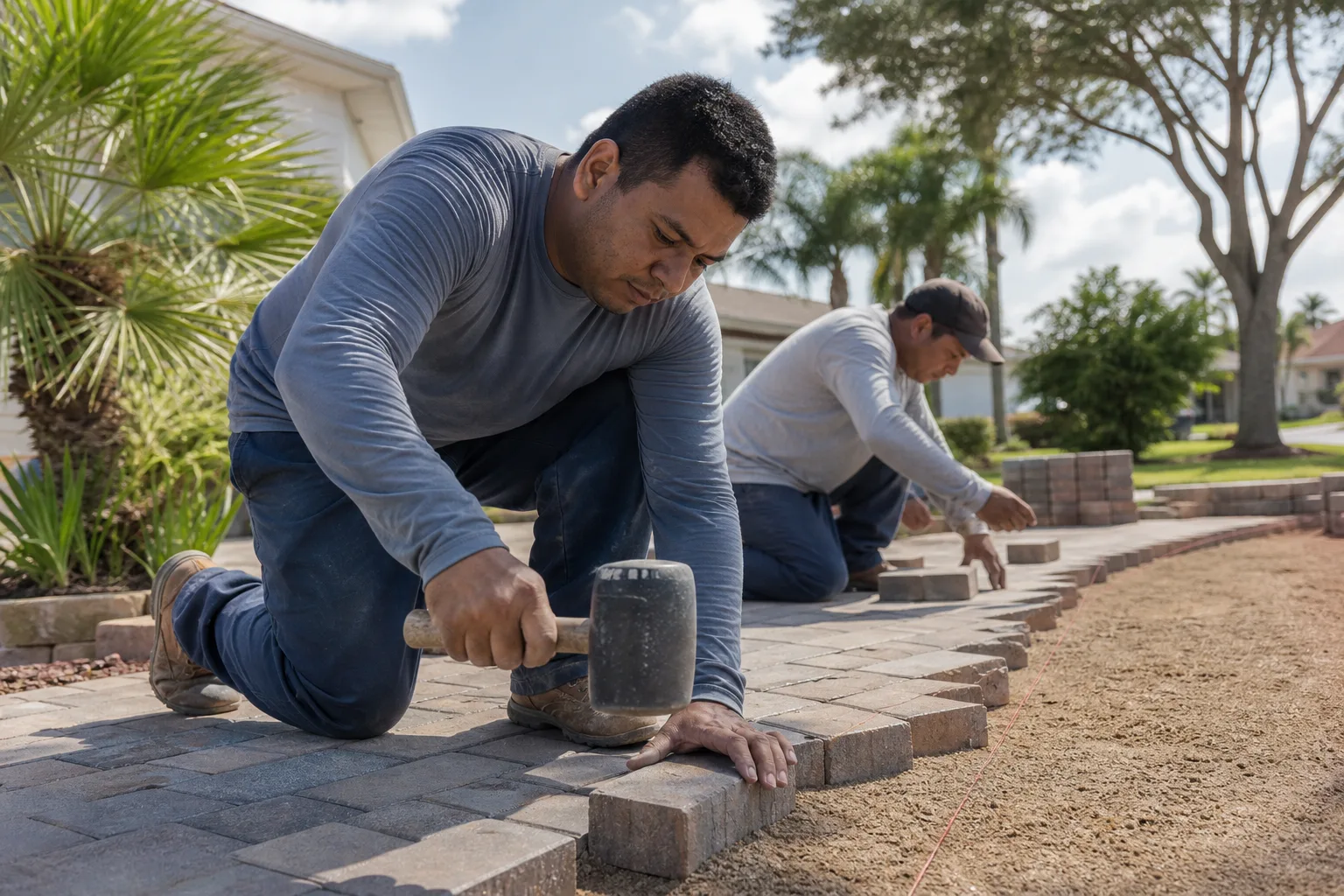
For a residential driveway carrying cars and trucks, we plan on a minimum of 6 inches of compacted base, and 8 inches is the safer figure where the soil is especially reactive or the driveway sees heavier loads. The material matters too. Crushed stone with a well-graded mix, laid in lifts and compacted with a plate or roller between passes, gives you a base that will hold its shape. Dumping the whole depth in one pass and running over it once does not.
The steps that separate a base that lasts from one that doesn’t:
- Excavate to the full depth required for base plus paver plus bedding sand.
- Proof-roll or compact the exposed subgrade so soft pockets show up before you build on them.
- Lay the aggregate in lifts of roughly 2 to 3 inches.
- Compact each lift with vibration before the next one goes down.
- Check grade and slope at every stage, not just at the end.
- Add a 1-inch bedding layer of coarse sand, screeded true, before setting pavers.
This is the layer you never see once the job is done, and it’s the one worth asking hard questions about. A written estimate that states base depth and compaction method tells you exactly what you’re buying. For the full scope of what a complete driveway build involves, see our driveway & pavers page.
Choosing the right paver material for Texas heat
McKinney summers push surface temperatures high enough that thermal expansion becomes a real design issue, not a footnote. Pavers, bedding, and jointing all move with heat, and the material you pick determines how gracefully it does that. Here’s how the main options compare for a North Texas driveway.
- Concrete pavers. The standard for driveways, and for good reason. Interlocking units, high compressive strength, and a small joint gap that absorbs expansion. Brands like Belgard, Unilock, and Techo-Bloc make profiles engineered for vehicle loads. Color goes through the full thickness, so a chip doesn’t show as a bright scar.
- Clay pavers. Fired brick units with excellent color permanence and a warm look. They handle heat well but need a properly compacted base just like concrete, and setts should be rated for vehicular traffic.
- Natural stone, including travertine. Beautiful in a courtyard, and stone does stay cooler underfoot. For a full driveway carrying daily vehicle weight, travertine is softer and more porous than concrete pavers and needs sealing and careful base work to avoid staining and wear. We steer most McKinney driveways toward concrete or clay and save stone for walkways and accents.
- Permeable grid systems. Open-cell grids filled with aggregate or grass let water pass through, which is useful where runoff is a problem. On clay, though, they only work if there’s a designed drainage path beneath them, because clay doesn’t drain. A grid over impermeable soil just holds water against the base.
The right way to choose is to match the material to the load and the soil, not to the photo on a supplier’s website. Cambridge Pavers and Tremron round out the options we work with. If your project runs from the driveway to the roofline, our Construction McKinney team can coordinate the hardscape with the rest of the exterior work instead of handing you off between trades.
Polymeric sand vs. traditional jointing sand
In McKinney’s summer rain events, polymeric sand holds and plain jointing sand washes out. That’s the short version. Traditional loose sand fills the joint and looks finished for a season or two, but water running across the surface picks it up, and once a joint is open, the pavers start to shift and the weeds move in.
Polymeric sand is a mix of fine aggregate and a binder that activates with water. Once it cures, it locks the joints while still allowing a little give for expansion. The catch is that it has to be installed correctly: joints cleaned to the right depth, sand swept in fully, surface blown clean, and the right amount of water applied without flooding it. A rushed application leaves a hazy film on the pavers or a layer that fails within a year.
What to check when you’re comparing quotes:
- Is polymeric sand specified by name, or just “sand”?
- Are joints at least 1/8 inch wide and filled to full depth?
- Is the surface cleaned of excess before curing?
- Will they re-apply after the first season if settling occurs?
For driveways, we recommend polymeric sand across the board. It lasts longer, resists erosion, and reduces weeds. Ask for it in writing on the estimate so there’s no substitution once the crew is on site.
Slope, drainage, and foundation protection
Most paver installers never raise this point, and they should: your driveway slope is part of your foundation’s water management system. In McKinney, where clay holds moisture and moves, water that pools against the house or runs under the driveway edge does more damage than any paver wear. The goal is to shed water away from the slab and the foundation, every time it rains.
What a properly graded driveway does:
- Slopes away from the house at a steady fall, typically about 2 percent, so water leaves the surface instead of standing.
- Directs runoff to a swale, a drain, or the street rather than toward the foundation line.
- Keeps the driveway edge from damming water against the base.
- Coordinates with gutters and downspouts so roof water doesn’t discharge onto the pavers.
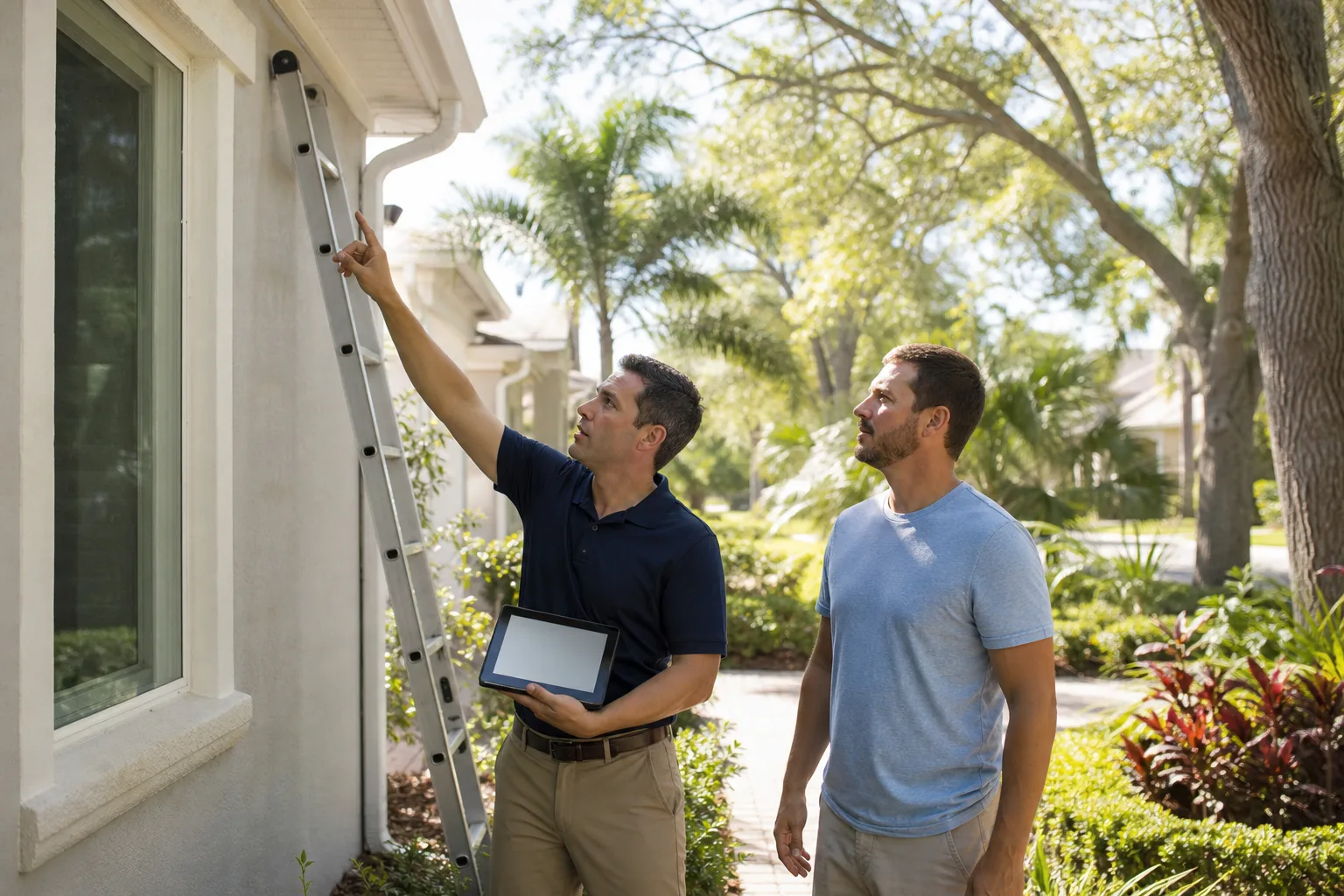
This is why a driveway can’t be designed in isolation. If the grading sends water toward the house, the pavers will look fine and the foundation will take the hit months later. During a free estimate, we walk the site and check where the existing water goes before we recommend a slope. It’s a five-minute conversation that heads off an expensive problem.
HOA approval in McKinney subdivisions
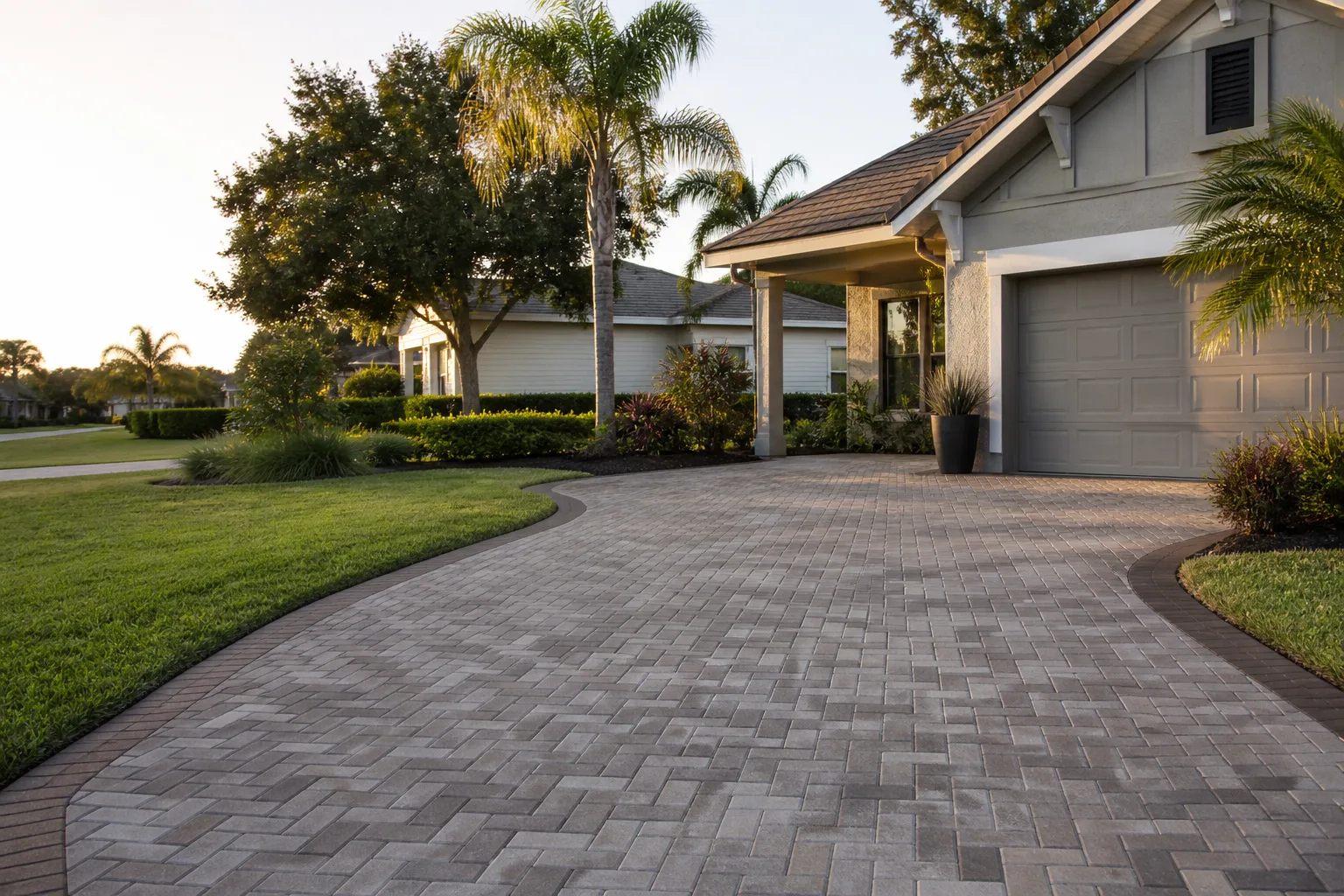
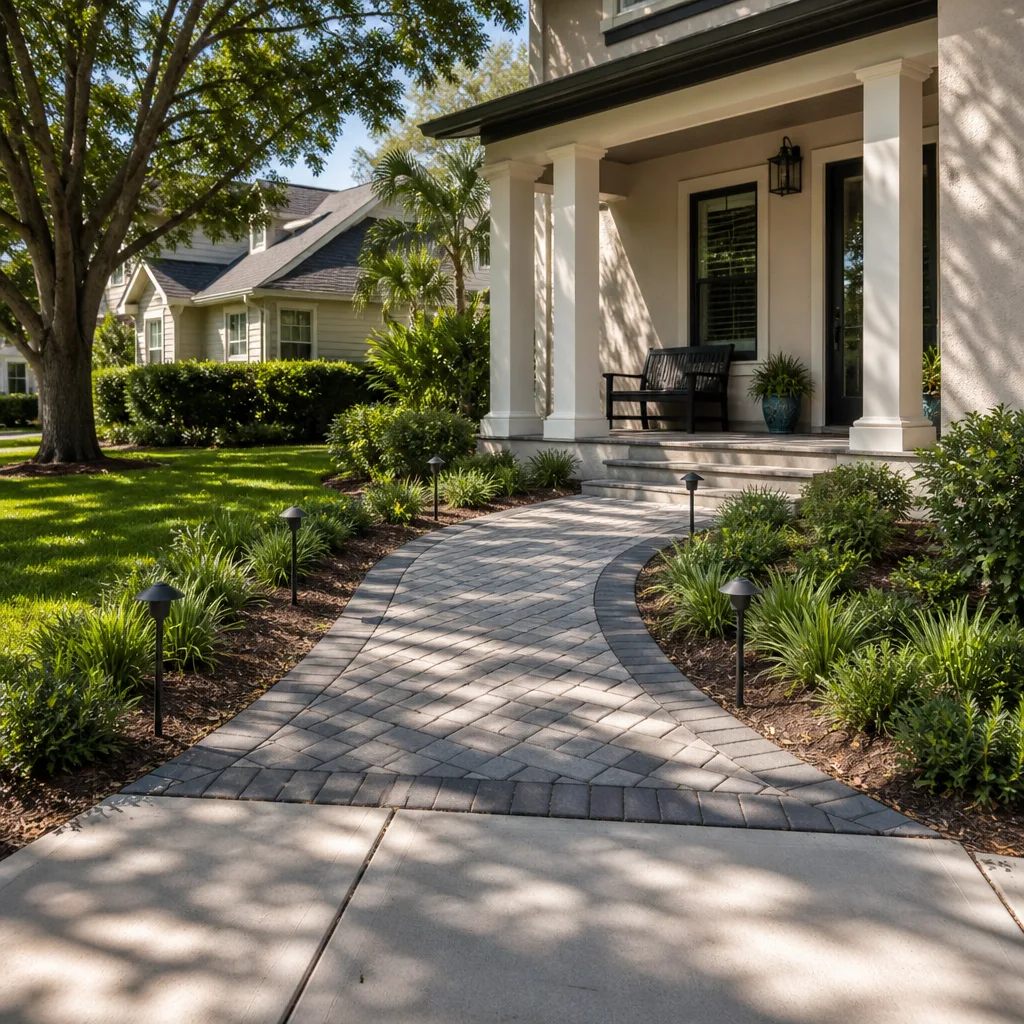
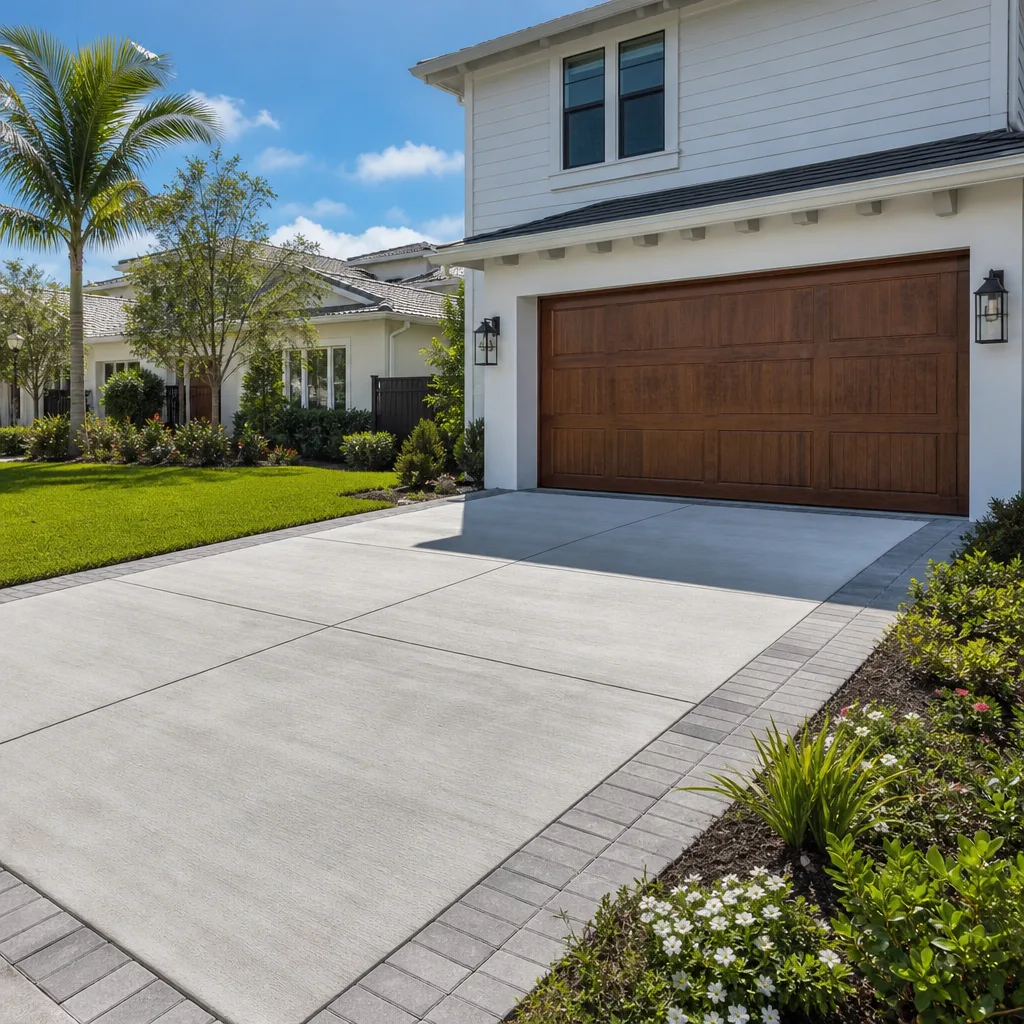
Many McKinney subdivisions have architectural review committees, and driveway changes usually need approval before work starts. The good news is that the materials that pass review most consistently are also the ones that perform well: neutral-colored concrete pavers in a running bond or herringbone pattern, consistent unit size, and pitches that look clean from the street.
What tends to get sent back:
- Bold color mixes that read as loud from the curb.
- Patterns that clash with neighboring driveways.
- Widening that encroaches on a setback, easement, or side-yard line.
- Missing submittal drawings or product samples.
Our advice is to submit the application before you sign an installation contract, not after. Pull the HOA’s design guidelines, pick two or three paver profiles from a supplier catalog, and include color photos and a simple site sketch. Most committees approve quickly when the submission is complete. If your project also touches the lot line, fence installation approvals often run through the same committee, so coordinate both at once.
How a paver driveway installation actually goes
A typical residential paver driveway in McKinney takes several days of work, depending on square footage, access, and weather. Timelines shift when spring rain keeps the base too wet to compact properly, so we don’t quote a hard finish date before the job starts. Here’s the sequence you can expect.
- Site walk and layout. We measure, check grades, identify utilities, and confirm that the HOA approval is in hand.
- Demo and excavation. Existing concrete or pavers come out, and the subgrade is cut to full depth.
- Subgrade prep. Soft spots are identified and corrected before any stone goes down.
- Base installation. Aggregate is placed in lifts and compacted to the planned depth.
- Bedding and setting. A sand bedding layer is screeded, and pavers are laid in the chosen pattern with edge restraints installed.
- Cutting and jointing. Edge cuts are made, joints are filled with polymeric sand, and the surface is cleaned and cured.
- Final walkthrough. We check slope, drainage, joints, and edge restraint, and walk you through what to expect over the first season.
If the project is part of a larger exterior or addition plan, our home additions & ADU work follows the same site-first discipline, so the hardscape and the structure don’t fight each other on grades.
What a paver driveway costs in McKinney
A paver driveway in McKinney typically runs anywhere from roughly $10 to $28 per square foot installed, depending on base depth, paver material, pattern complexity, and site access and demolition. A 2-car driveway of about 500 square feet commonly lands in the mid-five figures when the base work is done properly. These are estimates only. The written estimate sets the final price, and it’s free.
- Base excavation and compacted aggregate (6-8 inches): roughly $4 to $7 per square foot.
- Concrete pavers, standard profile: roughly $5 to $9 per square foot material.
- Premium or textured paver profiles: roughly $8 to $14 per square foot material.
- Polymeric sand and jointing: roughly $1 to $2 per square foot.
- Edge restraint and cuts: roughly $1 to $3 per square foot.
- Demo and haul-off of existing driveway: roughly $1 to $4 per square foot.
To put that in perspective, a quote that comes in far below the range is usually a quote for a 4-inch base, traditional sand joints, and no edge restraint. That’s how a driveway gets built twice. The written estimate should break out each line item above so you can see exactly where the money goes and what’s being left out.
Sealing and long-term maintenance
Sealer is often sold as the thing that makes pavers last forever. In McKinney, it’s better understood as a tool for a specific job: it slows color fade under heavy sun and helps repel water and stains. It does not fix a bad base, and it will not stop a clay-soil issue. Applying sealer over a failing joint or a settled corner just hides it for one more season.
What actually protects a paver driveway:
- Fix joints first. Re-sand with polymeric sand before you seal, never after.
- Wait for a dry stretch. Sealer needs a dry surface and time to cure. Applying it ahead of a rain event wastes the product.
- Choose the right finish. A simple penetrating sealer is usually more forgiving than heavy film-forming products in a hot climate.
- Watch the edges. Edge restraint movement is the first visible sign of a base problem. Catch it early.
Plan on a light re-sand and seal every few years, more often where tree cover drops debris or where runoff crosses the surface. If a corner drops, get it looked at before the problem spreads. Catching a settled section early is a repair. Waiting is a rebuild.
Common Mistakes to Avoid
- Building on a 4-inch base. It’s the standard in national guides and it’s wrong for McKinney’s clay. Insist on 6 to 8 inches of compacted aggregate, and get the depth in writing.
- Using plain sand in the joints. It looks finished for one season and then washes out with the first heavy rain. Specify polymeric sand.
- Skipping the HOA submission. Starting work before architectural approval is a hassle for everyone and can force a redo. Submit first.
- Ignoring drainage and slope. A driveway that leads water toward the house sets up foundation trouble. Walk the grades before signing.
- Choosing on price alone. The lowest bid is usually the one with a thin base, cheap joints, and no edge restraint. Compare what’s actually included.
- Sealing too soon. Sealer over a wet or open joint traps moisture and fails. Fix the joint first, then seal when it’s dry.
- Skipping the written estimate. A verbal number leaves no room to check base depth, paver brand, or jointing material. Ask for a line-item quote every time.
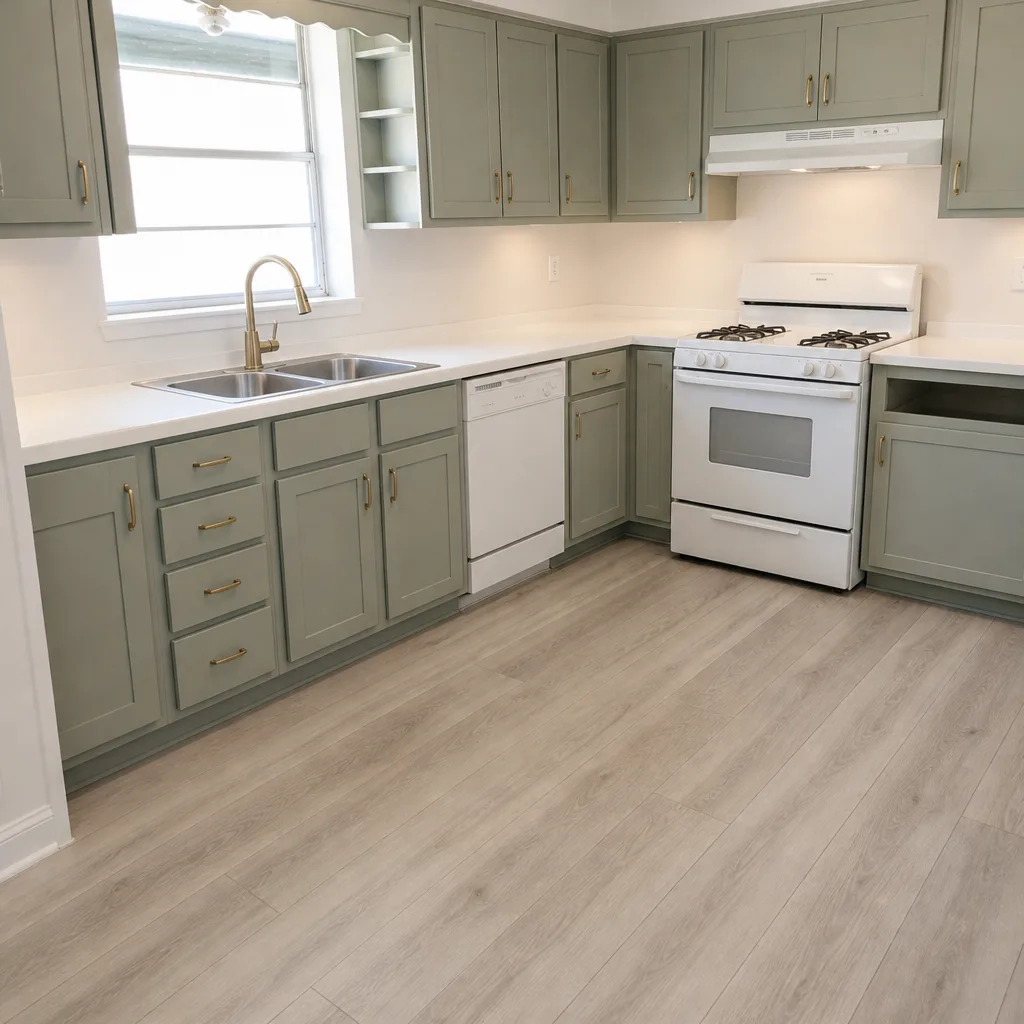
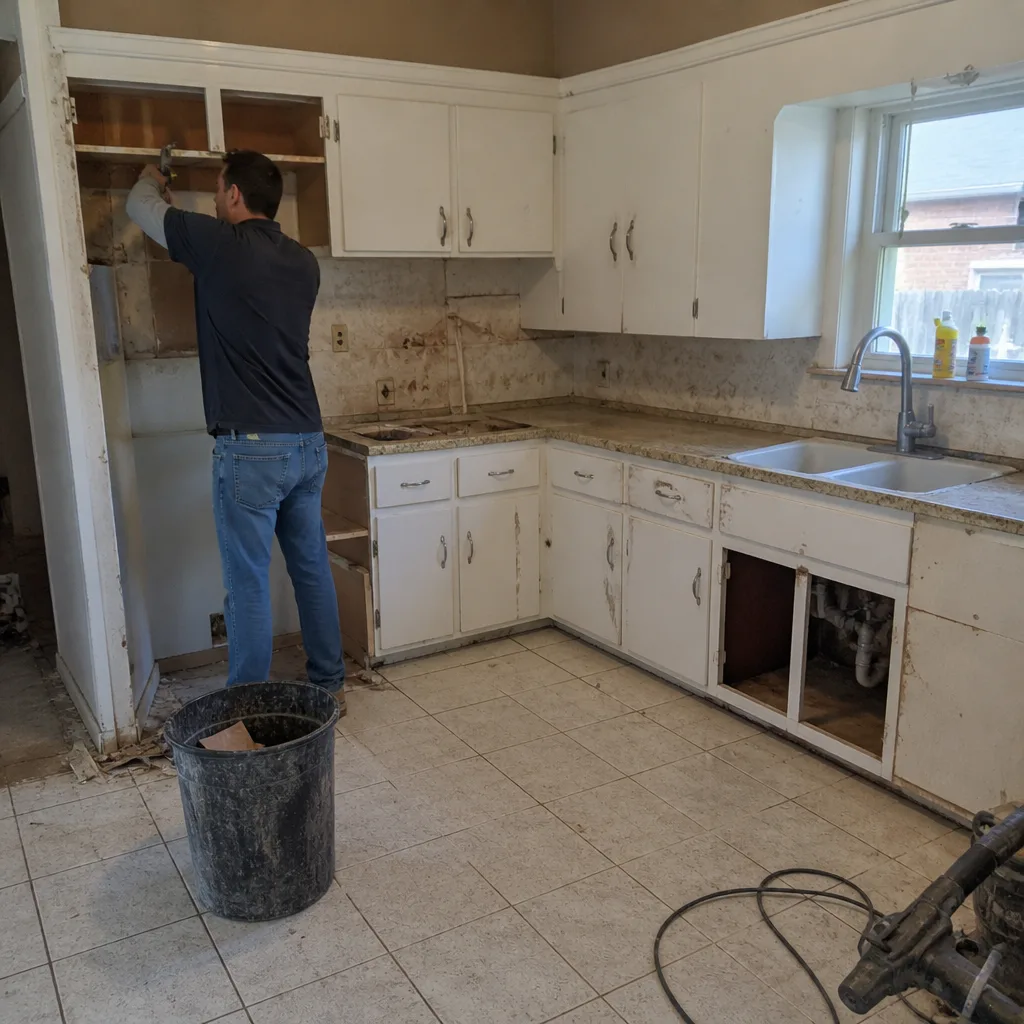
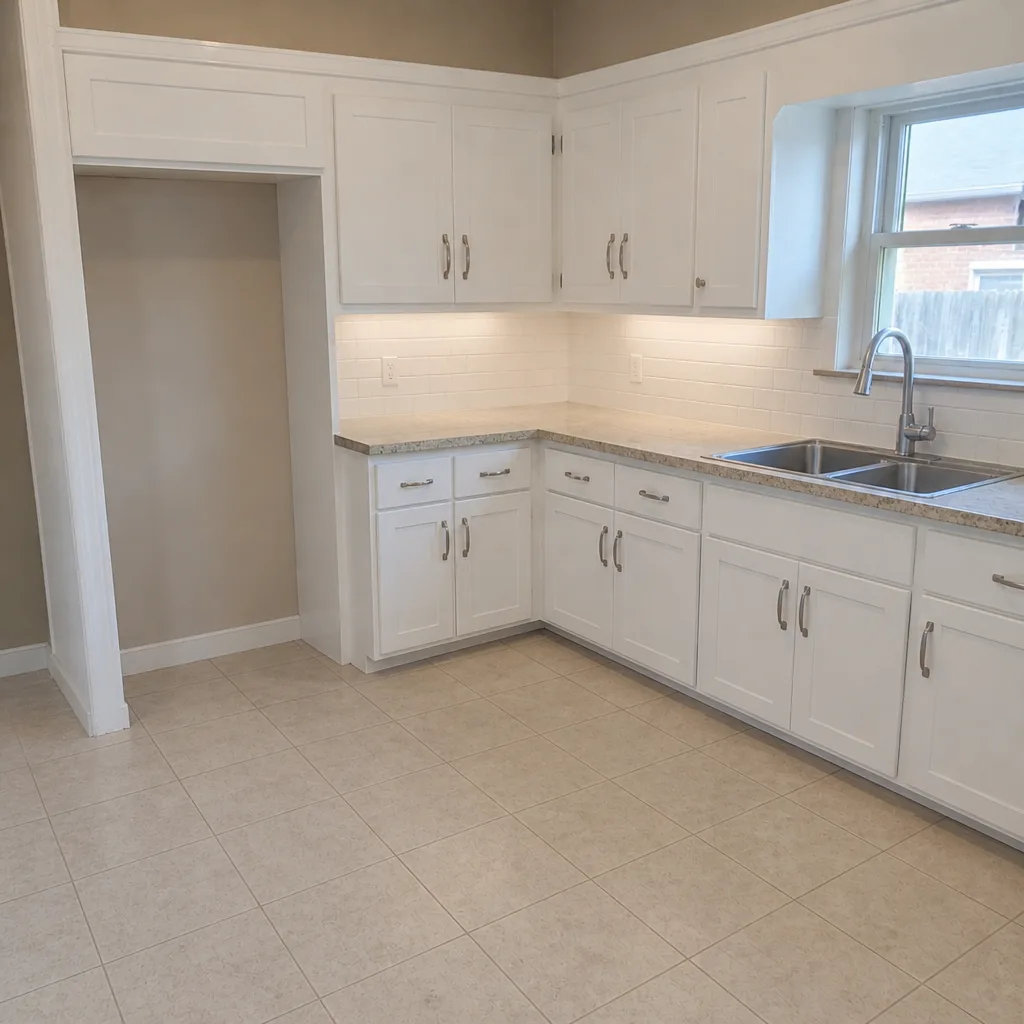
See the difference
 Before
 After
 Before
 After
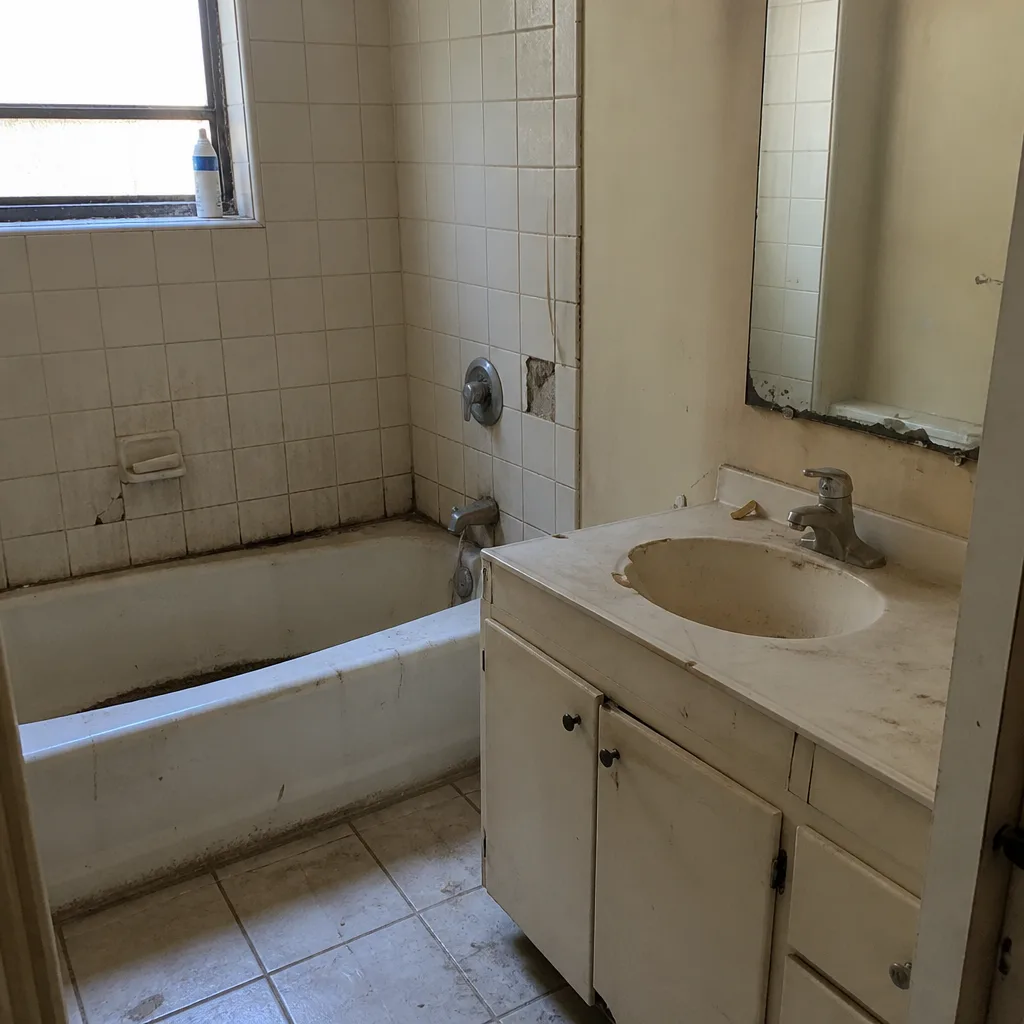 Before
 After
When to Call a Professional
Some driveway issues are worth a call now. A settled corner, an edge that’s lifting, joints that wash out every rain, or a driveway that’s started to pond water against the house all point to base or drainage problems that get worse with time. So does any new installation where the clay is reactive and the base matters more than the pavers. If your driveway is part of a larger exterior plan and the grading touches your fence line or future addition, that’s the moment to get the whole picture looked at before anything is installed. Construction McKinney offers free estimates in McKinney and can walk your site, check the grades, and give you a written line-item quote. Call (844) 761-9152 to schedule yours. Our technicians have up to 10 years of experience with paver and hardscape work.
Frequently Asked Questions
A minimum of 6 inches of compacted aggregate, and 8 inches where the clay soil is especially reactive or the driveway sees heavier loads. Most national guides cite 4 inches, but that figure assumes stable soil and it’s the leading reason paver driveways fail here. The written estimate should state the base depth and compaction method. Call (844) 761-9152 for an exact quote, with a free estimate.
Not if the estimate is written correctly. A proper line-item quote names base depth, paver brand and profile, jointing material, edge restraint, and demo and haul-off, so the scope is clear before work begins. If you change the scope, the price changes. Otherwise, the written estimate sets the final price. Call (844) 761-9152 to start with a free estimate.
Permit and HOA requirements depend on the scope and the city, and we confirm them as part of planning your project. Driveway re-surfacing usually needs at least HOA architectural approval in McKinney subdivisions, and major grading or widening can trigger a city permit. Ask us to include permit and approval coordination in your written estimate. Call (844) 761-9152 with your address and we’ll talk through what applies.
Most residential driveways take several days of work from demo through final walkthrough, with timeline depending on square footage, site access, and weather. Spring rain can hold up the base work, since compacting wet aggregate doesn’t produce a base that holds. We don’t quote a firm finish date before the job starts. Call (844) 761-9152 to schedule a free estimate.
Polymeric sand, without question. It cures into a binder that locks the joints and resists washing out, while plain jointing sand gets picked up by runoff in the first heavy rain. The installation has to be done right, with clean joints, full fill, and controlled watering, or you get a haze or an early failure. Call (844) 761-9152 for a quote that specifies polymeric sand.
Sometimes, but rarely a good idea for a driveway in McKinney. Setting pavers over existing concrete means the base is whatever the old slab offers, and a cracked slab will telegraph through the new surface. Where the slab is sound and the grade allows, a thin overlay can work for a walkway or patio, not usually a driveway. Call (844) 761-9152 and we’ll assess what your slab can support.
The Bottom Line
The driveway is the one part of your house you drive on every day, and it’s the part most homeowners understand least until something goes wrong. In McKinney, the difference between a paver driveway that lasts and one that doesn’t comes down to a few decisions: a properly compacted 6- to 8-inch base, a paver rated for vehicle traffic, polymeric joints, drainage that sends water away from the foundation, and an HOA submission you file before the crew shows up. Everything else, from color to pattern to sealer, is preference. Get those fundamentals right and you’ll have a driveway that looks as good in a decade as it does the week it’s finished.
Contact
Construction McKinney handles the full exterior and interior scope, from the driveway to the roofline, so you work with one contractor instead of juggling specialty trades. We pull from established paver brands including Belgard, Unilock, Techo-Bloc, Cambridge Pavers, and Tremron, and we write our estimates line by line so you can see exactly what’s going into your driveway. Call (844) 761-9152 for a free estimate in McKinney. We answer 24/7. Fast dispatch from 7am to 7pm, Sunday through Friday.
Written by the team at Construction McKinney.